A Cavity Does Not Always Start With a Hole: Where Curodont Repair Fits
Most people hear the word cavity and picture the same thing: a hole in a tooth that needs to be drilled and filled. That is what a cavity can eventually become, but tooth decay starts earlier than that. Before the surface breaks down, minerals can begin leaving the enamel and a lesion can develop underneath an outer surface that is still intact. This earlier stage matters because, in selected cases, dentistry has options that are very different from a traditional filling. Curodont Repair is one of them.
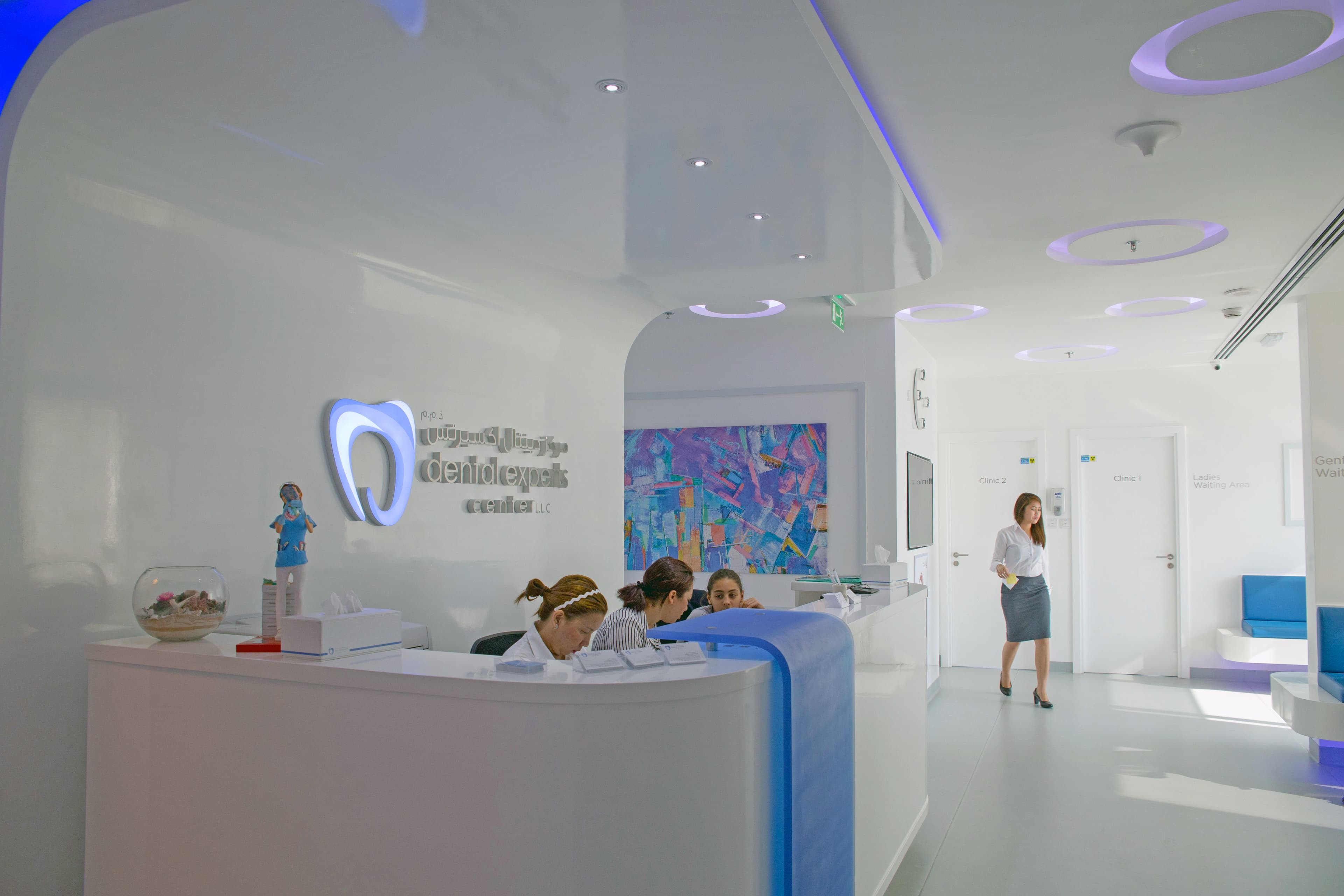
Dental Experts Center has introduced Curodont Repair as part of its move toward earlier diagnosis, prevention, and tooth-preserving care. The important point is not that every early lesion can now avoid a filling. It cannot. The important point is that a dentist can sometimes identify decay early enough to treat the disease process before drilling becomes necessary.
The Stage of Decay Before a Filling
Dental caries is a process, not a single event. Acids produced by bacteria in dental plaque draw minerals such as calcium and phosphate out of enamel. When mineral loss repeatedly outweighs mineral replacement, the enamel becomes more porous. On a visible surface, this can sometimes appear as a chalky white area. Between teeth, the same early lesion may be completely invisible in the mirror and only show on a bitewing X-ray.
At this point, the tooth surface may still be intact. There is demineralization, but no open hole. That difference is what creates an opportunity for non-restorative or minimally invasive treatment. Once the surface has broken down and a true cavity is present, the problem changes. A material that works inside an intact early lesion cannot rebuild missing tooth structure, and a restoration may then be needed.
What Curodont Repair Actually Is
Curodont Repair is a professional treatment based on a self-assembling peptide called P11-4. The liquid is designed to diffuse into a suitable early caries lesion. In the acidic environment of that lesion, the peptide molecules assemble into a three-dimensional matrix inside the porous enamel. That matrix can then act as a scaffold that attracts calcium and phosphate from saliva and supports the formation of new mineral within the lesion.
This is why the treatment is often described as biomimetic. It is trying to support a mineralization process inside the lesion rather than removing the affected enamel and replacing it with a filling. That wording still needs some care. Curodont does not make a damaged tooth exactly identical to untouched enamel, and it does not grow back enamel that has already been physically lost. Its role is in selected early, non-cavitated lesions where there is still a structure to preserve.
What the Research Supports So Far
The evidence is promising, but it is more useful when it is described accurately than when it is turned into a marketing percentage. A 2023 systematic review and meta-analysis published in The Journal of the American Dental Association included six clinical trials of P11-4 treatment. The review found that Curodont Repair likely increased caries arrest and reduced lesion size compared with control approaches. At the same time, the authors noted that the included trials had limitations, including elevated risks of bias, and called for longer-term studies.
More recent randomized clinical trials have also reported favorable results when P11-4 was combined with fluoride for non-cavitated lesions, including studies published in 2024 and 2025. These findings strengthen the case for the technology as an additional tool in early caries management, but they do not turn it into a universal replacement for fluoride, sealants, fillings, or other treatment. The diagnosis still decides the treatment.
Which Teeth May Be Suitable for Curodont
According to the manufacturer, Curodont Repair is intended for early, active, non-cavitated caries and can be considered on smooth surfaces, chewing surfaces, and between teeth. It may be used in permanent teeth and, in appropriate cases, primary teeth. For lesions between teeth, X-rays are particularly important because the dentist cannot directly see how far the lesion extends.
A caries-related white spot with an intact surface may also be considered, depending on the diagnosis. This is not the same thing as treating every white mark on a tooth. Fluorosis, molar-incisor hypomineralization, developmental enamel defects, and old trauma can also produce white or discolored areas, and those conditions are not automatically indications for Curodont. The first step is identifying what the spot actually is.
When Curodont Is Not the Right Treatment
The clearest limitation is a cavitated lesion. If enamel has collapsed and there is a physical hole that traps plaque and food, Curodont cannot fill that missing structure. The tooth may need a restoration. The same applies when decay is too advanced, when the pulp is involved, or when a tooth already has symptoms pointing to deeper disease. In those situations, delaying definitive treatment in the hope that a preventive product will reverse the problem would not be appropriate.
There is another limitation that is easy to miss: treating one lesion does not remove the reason the lesion formed. If a patient continues frequent sugar exposure, poor plaque control, dry mouth, or another major caries risk factor, new lesions can still develop. Curodont works best as one part of a broader caries-management plan rather than as a stand-alone fix.
Curodont and Fluoride Are Not Opposites
Fluoride remains one of the best-supported tools in caries prevention. It helps make enamel more resistant to acid and supports remineralization at the tooth surface. Curodont takes a different route by creating a peptide matrix within a suitable lesion where mineral can deposit. In clinical care, these approaches can complement each other rather than compete.
What the Appointment Usually Involves
The first part of the appointment is diagnosis. The dentist examines the tooth and may use bitewing or periapical X-rays when the lesion is not fully visible. If the lesion is suitable, the tooth is cleaned and isolated. The surface is conditioned so the liquid can enter the porous area, and Curodont Repair is then applied according to the clinical protocol. There is no drilling of the lesion itself, and local anesthetic is generally not needed for the application.
The process does not end when the patient leaves the chair. Mineral change within an early lesion happens over time, which is why follow-up matters. The dentist may monitor the surface clinically, compare X-rays at an appropriate interval, or use other diagnostic tools depending on the location and the patient's caries risk. The real outcome is not whether the appointment felt simple. It is whether the lesion becomes inactive and remains stable.
Why Earlier Diagnosis Changes the Conversation
The biggest value of a treatment like Curodont may be the change it creates in timing. If decay is only looked for once a tooth hurts or once a hole is visible, many of these options arrive too late. When dentists use careful visual examination, appropriate X-rays, and risk assessment to find disease earlier, the conversation can move from replacing tooth structure to preserving it.
Frequently Asked Questions
Is Curodont Repair the same as a filling?
No. A filling replaces tooth structure after part of the tooth has been physically lost or removed. Curodont Repair is used for selected early, non-cavitated caries where the surface is still intact. It is intended to support mineral formation within the lesion rather than fill a hole.
Can Curodont Repair treat every early cavity?
No. Suitability depends on the lesion's activity, depth, surface integrity, location, and the patient's overall caries risk. A dentist needs to examine the tooth and, for many lesions between teeth, review an X-ray before deciding whether Curodont is appropriate.
Does Curodont replace fluoride?
No. Fluoride remains a core part of preventing and managing tooth decay. Curodont uses a different mechanism and may be used alongside fluoride and normal preventive care rather than instead of them.
Can Curodont be used for white spots on teeth?
It may be considered for white spots caused by early caries when the surface is intact and the lesion is active. Not every white spot is decay. Fluorosis, hypomineralization, trauma, and other enamel conditions need a different diagnosis and may need a different treatment.
How do I know whether I need Curodont or a filling?
That decision cannot be made from appearance alone. The dentist assesses whether the surface is intact, how deep the lesion extends, whether it is active, and whether symptoms or pulpal involvement are present. Early non-cavitated lesions may be candidates for non-invasive care, while cavitated or advanced lesions usually require restorative treatment.
The Earlier a Lesion Is Found, the More Options You Usually Have
Curodont Repair does not remove the need for fillings. It gives dentists another option before a filling is necessary, but only when decay is found at the right stage. That makes early diagnosis and regular dental examinations more valuable, not less.
Dental Experts Center is a JCI-accredited multi-specialty dental clinic in Abu Dhabi. The team uses preventive, restorative, pediatric, orthodontic, and specialist care together so treatment can be based on what the tooth actually needs rather than on a one-size-fits-all approach.
If you have been told you have an early caries lesion, or you want to know whether a non-invasive option may be appropriate, contact Dental Experts Center or call +971 2 681 0060 to schedule an evaluation.